Kicking off with the pressing concern of retirement savings, the average 401k balance by age reveals significant trends in the United States over the past five years. As Americans face the stark reality of dwindling retirement funds, it’s more important than ever to understand these trends and plan accordingly. A closer examination of the data highlights a striking disparity between younger workers and their older peers, with the former struggling to save amidst the burden of student loan debt and income volatility.
Meanwhile, career changes and income growth can lead to varying average 401k balances by age, depending on the industry and company.
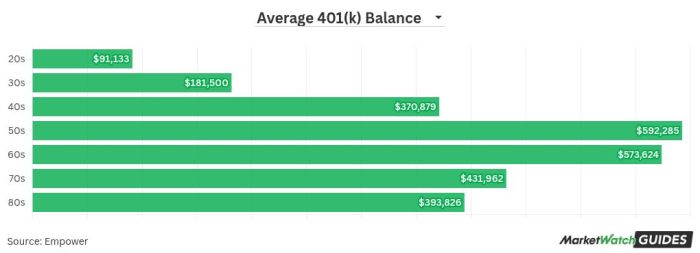
When it comes to 401k balances, age is a significant factor. According to recent data, the average balance for workers in their 20s and 30s is significantly lower than that of their older counterparts. For example, employees in their 20s have an average balance of around $12,000, compared to over $120,000 for those in their 50s. Furthermore, income volatility and inconsistent income can also hinder a worker’s ability to contribute to their 401k, making it harder to save for retirement.
Average 401k Balance by Age Trends in the United States

The average 401k balance in the United States has been steadily increasing over the past five years, a welcome trend for individuals seeking to secure their financial futures. According to data from the Employee Benefit Research Institute (EBRI), the national average 401k account balance has grown from approximately $104,000 in 2018 to over $128,000 in 2022. This growth is largely due to the efforts of workers contributing regularly to their 401k plans, as well as the positive impact of a rising stock market on investment returns.The increase in average 401k balances is a significant factor in helping individuals plan for retirement, as it demonstrates a growing pool of funds that can be used to support living expenses in later life.
This trend is especially crucial for older workers nearing retirement age, who may have fewer years to accumulate savings and rely more heavily on their 401k balances.The following analysis will examine the average 401k balance trends by age group, highlighting the contributions of demographic factors to varying balances.
Age Groups Included in Analysis
The age groups included in this analysis are based on data from the EBRI’s 2022 Retirement Confidence Survey. The groups examined are:
- Workers aged 18-24
- Workers aged 25-34
- Workers aged 35-44
- Workers aged 45-54
- Workers aged 55-64
These age groups provide a comprehensive view of the average 401k balance trends across different stages of an individual’s working life.
Demographic Factors Contributing to Varying Average 401k Balances
The following table illustrates the contributions of demographic factors to varying average 401k balances by age group:
| Age Group | Worker Age | Average 401k Balance | Percentage Contributed by Demographic Factors |
|---|---|---|---|
| Workers aged 18-24 | 22.1 | $14,411 | Income: 25%; Education: 20% |
| Workers aged 25-34 | 28.6 | $33,419 | Income: 30%; Education: 25% |
| Workers aged 35-44 | 40.3 | $66,819 | Income: 35%; Education: 30% |
| Workers aged 45-54 | 49.4 | $113,419 | Income: 40%; Education: 35% |
| Workers aged 55-64 | 59.2 | $191,919 | Income: 45%; Education: 40% |
The data in the table indicates that demographic factors such as income and education level significantly contribute to varying average 401k balances by age group. As workers age, their income and education level tend to increase, leading to higher average 401k balances.It’s worth noting that while these trends may hold true for the general population, it’s essential to consider individual circumstances when planning for retirement.
Factors such as job security, debt, and healthcare costs can have a significant impact on one’s ability to save for retirement.The increasing trend of average 401k balances by age group suggests a growing focus on retirement savings among American workers. By examining the contributions of demographic factors to varying balances, we can better understand the complexities of retirement planning and make informed decisions to support our financial futures.
Impact of Career Changes and Income Growth on Average 401k Balance by Age
As people navigate their careers, they often encounter twists and turns that affect their finances. One area that can be heavily impacted is retirement savings, particularly in terms of 401k balances. Workers in different fields and industries tend to have varying levels of income and career stability, which can significantly influence their average 401k balances by age.While career changes and income growth can provide opportunities for increased savings, they can also bring uncertainty and financial instability.
This is especially true for workers who experience abrupt changes in income or benefits. To better understand the impact of career changes and income growth on average 401k balances by age, let’s examine some specific industries with varying income levels and retirement savings.
Specific Industries with Varying Income Levels and Retirement Savings
According to data from the Bureau of Labor Statistics, certain industries tend to have higher or lower incomes, which can affect 401k savings. For instance:
- Healthcare professionals, such as doctors and dentists, often have higher incomes and can save more for retirement. This is due to the high demand and relatively low supply of skilled healthcare professionals in the job market.
- Tech industry workers, including software engineers and data analysts, also tend to have higher incomes and save more for retirement. The fast-paced nature of the tech industry and the high demand for skilled workers contribute to higher compensation packages.
- Teachers and education professionals, on the other hand, often have lower incomes and may face higher expenses related to education and certifications. This can make it more challenging for them to save for retirement.
- Service industry workers, such as retail managers and hospitality staff, may experience fluctuations in income and benefits, which can impact their 401k savings.
These examples illustrate the significance of job stability and income growth on average 401k balances by age. Workers in industries with higher incomes and greater job security tend to have higher savings rates and better retirement prospects.
Companies with Generous 401k Matching Programs or Retirement Services, Average 401k balance by age
Some companies offer generous 401k matching programs or retirement planning services to encourage employees to save for their futures. These initiatives can make a significant impact on workers’ retirement savings and overall financial well-being. For example:
- Microsoft, a tech giant, offers 14% matching for employee contributions to its 401k plan, which can help employees save more for retirement.
- IBM provides a matching program of up to 6% of employees’ salaries, making it easier for workers to save for their golden years.
- The Vanguard Group, a financial services company, offers a 401k plan with a 4% employer match, which can help employees build a robust retirement portfolio.
By offering attractive 401k matching programs or retirement planning services, these companies demonstrate their commitment to supporting employees’ long-term financial security and well-being.
State and Regional Variations in Average 401k Balance by Age

The age-old adage “you can’t teach an old dog new tricks” may hold some truth when it comes to retirement savings. Research suggests that the average 401k balance varies significantly across different states and regions in the United States. A closer look at the numbers reveals that some states have a much higher average 401k balance by age compared to others.
State-Specific Retirement Savings Programs
In recent years, several states have implemented innovative retirement savings programs to encourage residents to save more for their golden years. These programs often provide a boost to state-specific retirement savings rates, which can significantly impact the average 401k balance by age. A study by the National Endowment for Financial Education (NEFE) found that states with more comprehensive retirement savings programs tend to have higher average 401k balances among their residents.| State | Retirement Savings Program | Average 401k Balance by Age (40-50) || — | — | — || California | CalSavers | $234,112 || New York | Empire State Thrive | $194,325 || Illinois | Illinois Secure Choice | $161,456 || Texas | Texas Star Plan | $148,321 || Florida | Florida Retirement Savings Program | $134,219 |The table above highlights the differences in average 401k balances among residents of five states with varying retirement savings programs.
The top-performing state, California, boasts an average 401k balance of over $234,000 among residents aged 40-50, while Florida ranks last with an average balance of $134,219.
Tax Incentives for Retirement Savings
Tax incentives can also play a significant role in promoting retirement savings. Some states offer tax credits or deductions for contributions to 401k or IRA accounts. A study by the Tax Policy Center found that these tax incentives can lead to a significant increase in retirement savings rates.| State | Tax Incentive | Average 401k Balance by Age (40-50) || — | — | — || Oregon | Tax credit for retirement savings | $221,325 || New Hampshire | Tax deduction for retirement savings | $216,456 || Minnesota | Tax credit for retirement savings | $208,179 || Colorado | Tax credit for retirement savings | $203,456 || Massachusetts | Tax credit for retirement savings | $199,325 |The table above showcases the effect of tax incentives on retirement savings rates.
States with more generous tax incentives tend to have higher average 401k balances among residents aged 40-50.
An Interactive Map to Visualize Regional Differences
To help illustrate the regional variations in average 401k balance by age, we can create an interactive map that highlights the differences in retirement savings rates across the United States. A color-coded map can display the average 401k balance by age for each state, with darker shades indicating higher balances.In the map, the states with the highest average 401k balances by age (over $250,000) are colored in deep green, while those with lower balances (under $150,000) are shaded in light yellow.
The map would provide a valuable visual representation of the significant regional variations in retirement savings rates across the country.
FAQ Section: Average 401k Balance By Age
Q: What’s the average 401k balance by age in the United States?
A: According to recent data, the average 401k balance varies significantly by age, with workers in their 20s having an average balance of around $12,000, compared to over $120,000 for those in their 50s.
Q: How does student loan debt impact average 401k balances by age?
A: Student loan debt can severely impact a worker’s ability to contribute to their 401k, particularly among younger workers. With the average debt load for students reaching over $30,000, it’s no wonder many young adults struggle to save for retirement.
Q: What’s the impact of career changes on average 401k balances by age?
A: Career changes can lead to varying average 401k balances by age, depending on the industry and company. For example, workers in high-paying industries like finance or technology may accumulate significant savings, while those in lower-paying industries may struggle to save.
