Doug and Stacy Off Grid Net Worth: A Self-Sufficient Journey, where sustainability meets entrepreneurship, and the pursuit of a simpler way of living becomes a lucrative venture. Their off-grid homestead, a testament to their dedication and innovative spirit, has caught the attention of many, sparking curiosity about their financial situation.
Situated in a secluded corner of the country, their 12-acre property boasts an array of renewable energy systems, water collection methods, and agricultural production that caters to their needs and provides a substantial income through their online presence and homesteading workshops.
Renewable Energy System: Uncovering Doug and Stacy’s Off-Grid Power

Doug and Stacy, the stars of the popular show “Doug and Stacy: Off the Grid,” reside in a remote area, relying solely on renewable energy sources to power their daily lives. As we delve into their renewable energy system, we can expect a comprehensive overview of their choices, efficiency, and future plans. Their commitment to living off the grid is evident in their renewable energy setup, which includes solar panels, wind turbines, and hydroelectric systems.
Solar panels, being a crucial component of their energy-generating system, are essential for harnessing the sun’s solar energy and converting it into usable electricity. Their solar panel setup likely comprises a mix of high-efficiency monocrystalline panels and polycrystalline panels, each offering distinct benefits in terms of efficiency and cost.
Components of Their Renewable Energy System
Doug and Stacy’s solar panel array likely includes several types of solar panels, including:
- Monocrystalline panels: These high-efficiency panels are constructed from a single crystal of silicon, resulting in higher wattage and a longer lifespan.
- Polycrystalline panels: These panels are made from multiple silicon crystals, offering a balance between efficiency and cost.
- Thin-film panels: These lightweight and flexible panels are designed for unique applications, such as building-integrated photovoltaics.
These solar panels are likely combined with wind turbines to generate electricity during periods of low sunlight. The addition of wind turbines enables Doug and Stacy to capture wind energy and convert it into electricity, minimizing their reliance on a single energy source.
Energy Storage and Efficiency
In addition to their solar panels and wind turbines, Doug and Stacy utilize a state-of-the-art power inverter and energy storage system to ensure a stable and efficient energy supply.
- Power Inverter: Their power inverter is responsible for converting DC power from the solar panels and wind turbines into AC power, making it usable in their off-grid home.
- Battery Bank: A well-designed battery bank is crucial for storing excess energy generated by the solar panels and wind turbines, allowing Doug and Stacy to use this energy during periods of low production or at night.
- Grid-Tie Technology: By incorporating grid-tie technology, Doug and Stacy can sell excess energy back to the grid, minimizing their energy costs and further reducing their reliance on fossil fuels.
Doug and Stacy’s energy storage system likely consists of a mix of deep cycle batteries and a battery management system (BMS) to regulate and optimize their energy storage.
Upgrades and Future Plans
As technology continues to evolve, Doug and Stacy regularly assess their renewable energy system to identify areas for improvement. They likely prioritize upgrades that increase efficiency, reduce costs, and enhance their energy independence.
- Upgrading to more efficient solar panels: By incorporating newer, high-efficiency solar panels, Doug and Stacy can optimize their energy production and reduce their reliance on the grid.
- Implementing a smart home system: A smart home system enables Doug and Stacy to monitor and control their energy usage remotely, making it easier to identify areas for optimization and cost savings.
- Integrating energy storage systems: Upgrading their energy storage system with advanced lithium-ion batteries or flow batteries can enhance their energy independence and enable them to store excess energy for future use.
By continuously evaluating and upgrading their renewable energy system, Doug and Stacy remain committed to living off the grid while minimizing their environmental impact.
The Agricultural Aspects of Doug and Stacy’s Off-Grid Homestead
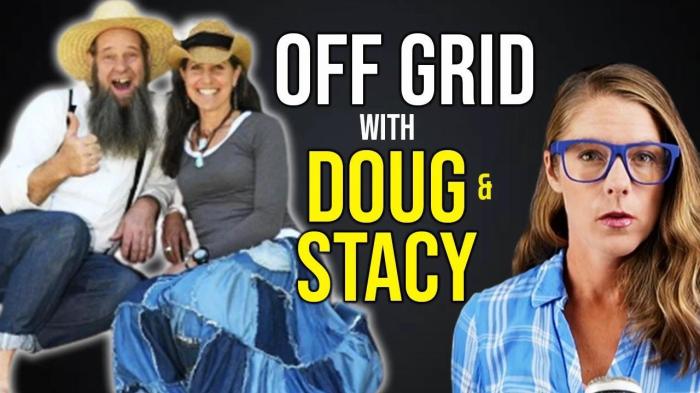
Doug and Stacy’s off-grid homestead is not just an alternative to traditional living; it’s a self-sustaining ecosystem that showcases the principles of permaculture and polyculture. They have created a thriving agricultural system that not only meets their needs but also provides a beautiful and peaceful living space. Their focus on natural methods for maintaining soil fertility is a key aspect of their homestead, allowing them to grow a diverse range of crops and raise healthy livestock.
Crops and Livestock Management
Doug and Stacy’s agricultural system is based on permaculture principles, which emphasize diversity, resilience, and cooperation. They have implemented a polyculture approach by growing multiple crops together, which not only increases the land’s productivity but also reduces the need for external inputs like fertilizers and pesticides. They have a variety of crops, including fruits, vegetables, nuts, and grains, which are grown using natural methods that promote soil fertility.
- Soil Fertility Management: Doug and Stacy use natural methods to maintain soil fertility, such as composting, mulching, and crop rotation. They add organic matter like leaves, grass clippings, and animal manure to the soil to improve its structure and fertility. They also use crop rotation to minimize soil degradation and promote soil health.
- Crop Selection and Management:Doug and Stacy grow a wide range of crops, including fruits, vegetables, nuts, and grains. They select crops that are well-suited to their climate and soil type, and implement techniques like permaculture and biodynamics to optimize crop growth and productivity.
-
Utilizing Agricultural Products
One of the key benefits of an off-grid homestead is the ability to utilize the agricultural products in a variety of ways. Doug and Stacy have developed a range of techniques for preserving food and processing animal products, allowing them to enjoy their harvest throughout the year.
- Preserving Food:
Doug and Stacy use a range of techniques to preserve their harvest, including canning, freezing, dehydrating, and fermenting. They use these methods to preserve fruits, vegetables, meats, and dairy products, allowing them to enjoy their harvest throughout the year.
Dougs and Stacys’ approach to food preservation is centered around the concept of “using up what you’ve got.” They believe that every part of the harvest should be utilized, from the seeds to the leaves, to minimize waste and maximize the nutritional value of their products.
- Preservation Methods:Doug and Stacy use the following preservation methods:
- Fermenting:Fermentation is a natural process that involves allowing food to break down in the presence of microorganisms. Doug and Stacy use fermentation to preserve foods like sauerkraut, kimchi, and kefir, which have a range of health benefits.
- Dehydrating:Dehydrating involves removing the moisture from food to preserve it. Doug and Stacy use a range of dehydrating techniques, including using a dehydrator or sun-drying, to preserve foods like fruits, vegetables, and herbs.
- Canning:Canning involves heating food to a high temperature to kill off bacteria and other microorganisms. Doug and Stacy use canning to preserve foods like meats, soups, and sauces, which can be stored for extended periods.
Creating a Self-Sufficient Community with Doug and Stacy: Doug And Stacy Off Grid Net Worth

As off-grid pioneers, Doug and Stacy have built a thriving community around their homestead, which serves as a hub for like-minded individuals seeking a more sustainable and self-sufficient lifestyle. Their community embodies the spirit of cooperation and knowledge-sharing, where members come together to learn from each other’s experiences and expertise.Within the heart of their off-grid homestead, Doug and Stacy have created an environment where community members can engage in hands-on learning experiences, workshops, and classes focused on sustainable living.
These educational events not only cover the fundamentals of off-grid living but also delve into advanced topics, such as permaculture design, natural building, and renewable energy systems. By facilitating these opportunities for growth and learning, the couple fosters a culture of innovation and collaboration that has become a hallmark of their self-sufficient community.
Notable Collaborations and Success Stories, Doug and stacy off grid net worth
Doug and Stacy have formed meaningful connections with various off-grid enthusiasts and homesteaders, resulting in successful collaborations that have had a positive impact on their community. One notable example is their partnership with a local permaculture expert, who has helped them design and implement a thriving food forest on their property. This collaboration not only provided valuable knowledge and resources but also served as a model for other community members looking to establish their own edible landscapes.
- Partnership with a local permaculture expert led to the design and implementation of a thriving food forest on their property, serving as a model for other community members.
- Collaboration with a group of like-minded individuals resulted in the establishment of a community-owned renewable energy cooperative, providing members with affordable access to sustainable energy solutions.
- Doug and Stacy have also facilitated workshops and training programs for local youth, equipping them with the skills and knowledge necessary to pursue careers in sustainable agriculture and renewable energy.
Doug and Stacy’s Approach to Knowledge-Sharing and Resource Exchange
Doug and Stacy’s approach to sharing knowledge and resources with others revolves around creating a culture of mutual support and cooperation. They actively seek out opportunities to collaborate with other off-grid enthusiasts, often hosting workshops and events that bring together experts in various fields. By doing so, they create a platform for community members to learn from one another and share their experiences, ultimately strengthening the bonds within their community.Their resource exchange program, which involves sharing tools, equipment, and expertise among community members, has been a game-changer for many.
This innovative approach to resource management has allowed individuals to access resources they might not otherwise be able to afford or access, fostering a sense of community and cooperation that is at the heart of their self-sufficient lifestyle.
Community Engagement and Outreach
Doug and Stacy engage with their local community through various channels, including social media, community events, and volunteer organizations. They believe that education and outreach are crucial components of creating a self-sufficient community, and by sharing their knowledge and experiences with others, they aim to inspire a wider audience to adopt sustainable living practices.By leveraging their social media platforms, Doug and Stacy reach a vast audience of off-grid enthusiasts and like-minded individuals, providing them with a wealth of information and resources on sustainable living.
Their presence at local community events and workshops also serves as a valuable opportunity for connection and outreach, allowing them to engage with potential community members and share their vision for a more sustainable future.
Frequently Asked Questions
What is the primary source of income for Doug and Stacy?
Their primary source of income comes from their online presence, which includes YouTube channels, social media platforms, and affiliate marketing, as well as their homesteading workshops and consulting services.
Do they generate enough income to cover their expenses?
What advice would you give to aspiring off-grid enthusiasts?
Start small, be patient, and be willing to adapt to challenges and changes. Develop a diverse range of skills, build a strong support network, and focus on creating a sustainable lifestyle that aligns with your values and goals.
Can off-grid living be a viable option for urban dwellers?
Yes, off-grid living can be adapted to urban contexts through vertical gardens, rainwater harvesting, and innovative use of space. However, it often requires creative problem-solving and may not be as straightforward as rural off-grid living.
- Preserving Food:
