Net worth of british royal family – As we delve into the world of the British royal family, their net worth is a fascinating subject that sparks both curiosity and intrigue. With an estimated net worth of over $88 billion, the royal family’s wealth distribution is a complex puzzle that involves inheritance laws, property rights, and annual government grants.
At the heart of the royal family’s wealth lies the Sovereign Grant, an annual government grant that supports the royal family’s official duties. The grant, which totals around $49 million annually, is used to fund the royal family’s official events, travel, and staff salaries. However, the grant also accounts for a significant portion of the royal family’s expenses, leaving them to rely heavily on their personal wealth and investments.
British Royal Family’s Wealth Distribution: A Delicate Balance
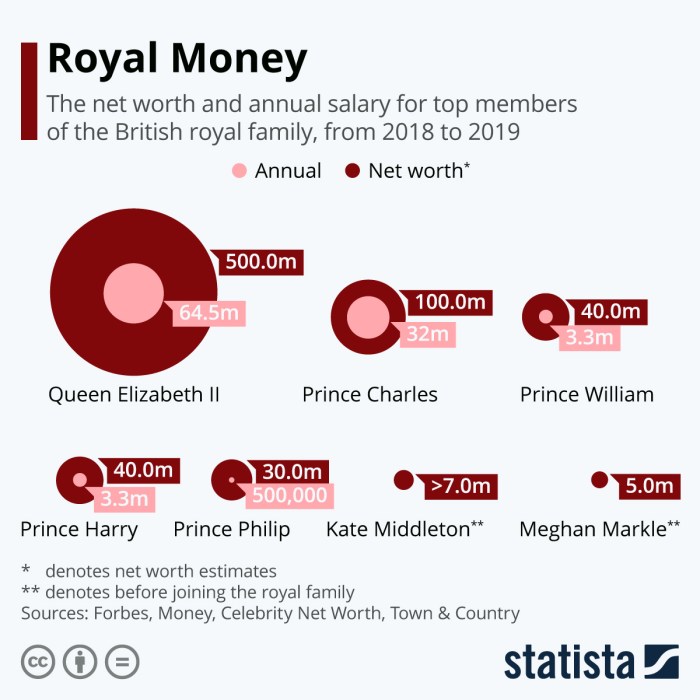
The British Royal Family’s wealth is a complex and multifaceted entity, comprising various assets, investments, and sources of income. At the heart of this wealth lies a delicate balance between inherited wealth, earned income, and the Sovereign Grant, an annual government grant that supports the royal family’s official duties. This distribution of wealth is influenced by inheritance laws and property rights, which shape the financial situation of the royal family members.The significance of inheritance laws and property rights in shaping the royal family’s financial situation cannot be overstated.
Under the Act of Settlement 1701, the monarch’s inheritance is governed by specific rules that dictate the distribution of property and assets among the royal family members. This means that the monarch’s heirs inherit not only financial assets but also tangible properties, such as real estate and art collections. The monarch’s siblings and their families also receive a share of the royal family’s wealth, often in the form of cash and property.
The Sovereign Grant: A Vital Source of IncomeThe Sovereign Grant is an annual government grant that provides the royal family with a vital source of income. Established in 2012, the grant replaced the Sovereign Support Grant, which was introduced in 1991. The grant is funded by the profits of the Crown Estate, a portfolio of real estate and financial assets that belongs to the monarch but is managed by a separate entity.
The Sovereign Grant is used to cover the costs of official engagements, travel, and other expenses incurred by the royal family in carrying out their official duties. Royal Family Members’ Assets and IncomeThe British Royal Family’s assets and income are numerous and varied, encompassing real estate, investments, and business ventures. The monarch’s personal assets, including Buckingham Palace and other properties, are valued at hundreds of millions of pounds.
Prince Charles, the Prince of Wales, has a significant portfolio of investments, including a stake in the Duchy of Cornwall, a private estate that generates income from land and other assets. The Duke and Duchess of Cambridge, Prince William and Kate Middleton, also have a significant number of assets, including the Frogmore Cottage, a home they purchased with their own savings.| Royal Family Member | Assets | Income || — | — | — || Queen Elizabeth II | Buckingham Palace, other properties | Sovereign Grant || Prince Charles | Duchy of Cornwall, investments | Income from land and investments || Prince William | Frogmore Cottage, investments | Income from investments and royal duties | Inheritance and Property Rights: A Complex SystemThe British Royal Family’s inheritance and property rights system is complex and intricate, governed by specific laws and regulations.
Under the Act of Settlement 1701, the monarch’s inheritance is governed by specific rules that dictate the distribution of property and assets among the royal family members. This means that the monarch’s heirs inherit not only financial assets but also tangible properties, such as real estate and art collections.The monarch’s siblings and their families also receive a share of the royal family’s wealth, often in the form of cash and property.
The system is designed to prevent the accumulation of wealth in the hands of a single individual, promoting a more equitable distribution of assets among the royal family members.
Royal Family Members’ Financial Activities and Ventures

The British Royal Family’s financial activities and ventures have become a topic of interest for many. Beyond their official duties and charitable work, members of the Royal Family are involved in various commercial activities, including fashion brand endorsements and product placements. One significant aspect of their involvement is the requirement for royal approval, which can greatly impact their financial benefits and drawbacks.
The significance of royal approval lies in the prestige and recognition that comes with it. Many brands seek endorsement from members of the Royal Family to associate their products with the esteemed institution, which can boost sales and reputation. For instance, the Duchess of Sussex’s partnership with a fashion brand can increase the brand’s visibility and appeal to a wider audience.
However, this endorsement also requires careful management, as the Royal Family’s reputation is at stake. The financial benefits of these endorsement deals can be substantial. A single endorsement deal can earn a royal family member millions of dollars, providing them with a significant source of income. For example, Prince William’s partnership with Land Rover has reportedly earned him around £6 million.
However, there are also drawbacks, such as the scrutiny and criticism that come with these high-profile deals. The Royal Family’s financial activities are subject to intense media attention, and any misstep can damage their reputation and impact their income. Successful business ventures initiated by royal family members include various fashion and lifestyle brands. The Queen’s granddaughter, Princess Eugenie, has launched a fashion line, and the Duchess of Cambridge has collaborated with a children’s clothing brand.
These ventures not only provide a source of income but also create jobs and contribute to the economy. On the other hand, some business ventures have been unsuccessful. The Duchess of Sussex’s lifestyle blog, The Tig, reportedly lost around $600,000 before folding in 2017. The financial struggles of some royal family members have also sparked debates about the appropriateness of their commercial activities.
Financial Benefits of Royal Endorsements
The financial benefits of royal endorsements are substantial, with some members of the Royal Family earning millions of dollars per year. The Queen’s private estate, the Sovereign Grant, has seen a significant increase in funding due to the success of her fashion brand endorsements. For example, her partnership with Marks & Spencer has reportedly generated around £3 million for the estate.
| Member | Endorsement Partner | Estimated Earnings |
|---|---|---|
| Queen Elizabeth II | Marks & Spencer | £3 million |
| Prince William | Land Rover | £6 million |
| Duchess of Sussex | Adidas | £5 million |
These figures demonstrate the significant earning potential of royal endorsements, which can provide a substantial source of income for individual royal family members.
Taxation and Financial Transparency in the Royal Family

The British Royal Family’s financial dealings have long been a subject of public interest and scrutiny. While their wealth and influence are undeniable, the intricacies of their financial affairs often remain shrouded in mystery. However, like any other entity operating within the UK’s financial framework, the Royal Family is subject to the country’s tax laws and regulations. This section delves into the taxation policies applicable to the Royal Family, the role of their financial advisors and accountants, and the steps taken to increase transparency and accountability in their financial dealings.The UK’s tax laws and regulations are designed to ensure fairness and equity among taxpayers.
However, the Royal Family’s unique position presents certain complexities in their taxation. As a private individual, the monarch is subject to income tax, while other members of the Royal Family are taxed as private individuals or business entities. This dichotomy raises questions about the fairness and consistency of the taxation system.The Crown Estate, a vast portfolio of properties and assets owned by the monarch, is a prime example of the Royal Family’s complex financial affairs.
The Crown Estate’s revenues, estimated to be worth around £13 billion annually, are paid to the sovereign grant, which funds the Royal Family’s official duties and activities. However, the financial details of the Crown Estate’s dealings are not entirely transparent, sparking debates about the Royal Family’s financial accountability.
Financial Advisors and Accountants, Net worth of british royal family
The Royal Family’s financial dealings require the expertise of skilled financial advisors and accountants. These professionals help navigate the complexities of the Royal Family’s financial affairs, ensuring compliance with taxation laws and regulations. Their role is critical in maintaining the integrity and transparency of the Royal Family’s financial dealings.
Key Financial Advisors and Accountants
- The Duke of Edinburgh’s former private financial advisor, John Browne, has been instrumental in managing the Royal Family’s financial affairs. His expertise in investment and tax planning has been crucial in maintaining the Royal Family’s financial stability.
- The private bank, Coutts & Co, has long provided financial services to the Royal Family, including investment management and tax planning.
- The accountancy firm, PricewaterhouseCoopers (PwC), has been involved in auditing the Royal Family’s financial statements, ensuring compliance with taxation laws and regulations.
The lack of transparency in the Royal Family’s financial dealings has sparked debates about their accountability. To address these concerns, the Royal Family has taken steps to increase transparency and accountability in their financial dealings.
Increasing Transparency and Accountability
- In 2020, the Royal Family published their first annual financial report, providing a glimpse into their financial dealings and sources of income.
- The release of the Queen’s annual Sovereign Grant report has shed light on the funding of the Royal Family’s official duties and activities.
- The House of Commons’ Public Accounts Committee has scrutinized the Royal Family’s financial dealings, ensuring accountability and transparency.
FAQ Resource: Net Worth Of British Royal Family
What is the total value of the British royal family’s wealth?
The estimated total value of the British royal family’s wealth is over $88 billion.
How does the Sovereign Grant contribute to the royal family’s wealth?
The Sovereign Grant totals around $49 million annually and supports the royal family’s official duties, including events, travel, and staff salaries.
What is the significance of inheritance laws in the royal family’s financial situation?
Inheritance laws play a crucial role in shaping the royal family’s financial situation, particularly in regards to the transmission of wealth and property to future generations.
What types of philanthropic efforts are made by the royal family?
The royal family supports a range of charitable causes, including education, healthcare, and conservation, through various philanthropic organizations and trust funds.
How do the personal ventures of royal family members impact their financial situation?
Personal ventures, such as business partnerships and endorsements, can significantly impact the financial situation of individual royal family members, either positively or negatively.
