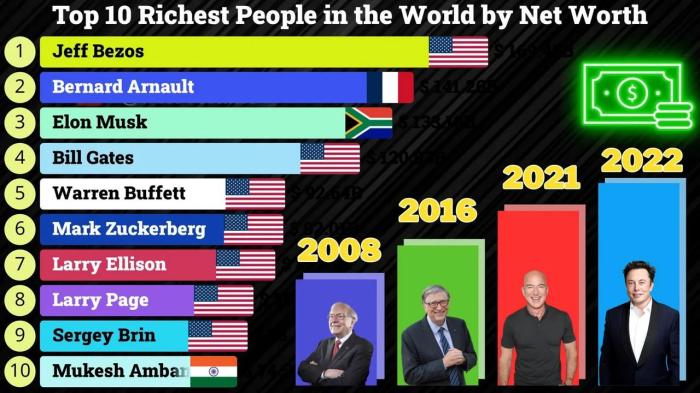
With the world’s wealthiest individuals amassing fortunes that leave us in awe, it’s time to take a closer look at the top 10 highest net worth of all time. From industrial moguls to financial titans, these individuals have left an indelible mark on the global economy. But what drives their unparalleled success? Is it their shrewd business acumen, their ability to take calculated risks, or perhaps their philanthropic endeavors?
In this journey, we’ll delve into the lives of these enigmatic figures and explore the intricacies of their wealth-building strategies.
From the pioneering entrepreneurs who transformed industries to the savvy investors who capitalized on emerging trends, our roster of the top 10 highest net worth individuals of all time is a fascinating tale of innovation, perseverance, and visionary leadership.
The Evolution of Wealth Creation Through Historical and Cultural Transformations

Wealth creation is often shaped by a combination of historical events, cultural values, and societal norms. As societies evolve, so do the ways in which individuals and communities accumulate and distribute wealth. This evolution is a complex process, influenced by various factors that have shaped the trajectory of human history.Over time, major historical events such as wars, revolutions, and pandemics have significantly impacted the accumulation of wealth.
Wars have often led to the redistribution of wealth, with winners seizing control of resources and assets from defeated nations. For example, the Roman Empire’s extensive conquests resulted in the accumulation of vast wealth, which was used to fund public works, build infrastructure, and support a large military.
Impact of Wars on Wealth Creation
During times of war, the value of certain assets can fluctuate significantly. For instance, the price of gold often increases during periods of conflict, as investors seek safe-haven assets. Conversely, the value of stocks and real estate can decline, as investors become risk-averse and seek liquidity.
- The Roman Empire’s extensive conquests led to the accumulation of vast wealth, which was used to fund public works, build infrastructure, and support a large military.
- The Mongol Empire’s expansion under Genghis Khan resulted in the plunder and redistribution of wealth, often with brutal consequences for conquered populations.
- The Industrial Revolution in Europe and North America was characterized by the rapid accumulation of wealth through the development of new technologies and industries.
Cultural and Societal Values Influencing Wealth Creation
Cultural and societal values play a significant role in shaping individual attitudes towards wealth and its distribution. For example, in some cultures, the accumulation of wealth is seen as a means to achieve status and prestige, while in others, it is viewed as a means to secure the well-being of oneself and one’s community.
- In many Asian cultures, the concept of “face” and social harmony is critical in shaping wealth creation behaviors. For instance, in China, business relationships are often built on trust and a sense of community, rather than strictly on monetary gain.
- In some Indigenous cultures, wealth is not measured solely in material terms, but also in terms of social relationships and community well-being.
- The concept of “social entrepreneurship” is becoming increasingly popular, with many individuals and organizations seeking to create social and environmental impact alongside financial returns.
Evolution of Wealth Creation Through Historical and Cultural Transformations
The evolution of wealth creation is a complex and ongoing process, shaped by historical events, cultural values, and societal norms. As societies continue to evolve, new forms of wealth creation emerge, such as impact investing, social entrepreneurship, and technological innovation. Ultimately, the future of wealth creation will depend on the interplay between these factors, as well as the values and priorities of individuals and communities around the world.
Impact of Technological Innovation on Wealth Creation
Technological innovation has played a significant role in shaping the trajectory of wealth creation throughout history. From the development of the printing press to the emergence of the internet, new technologies have often led to the creation of new industries, new opportunities for wealth creation, and new forms of social and economic organization.
- The development of the internet and e-commerce platforms has enabled individuals and businesses to reach global markets, creating new opportunities for wealth creation.
- The emergence of cryptocurrencies and blockchain technologies has opened up new possibilities for secure, decentralized, and transparent financial transactions.
- The development of artificial intelligence and machine learning has enabled the creation of new industries, such as AI-powered finance and healthcare.
Contrasting Examples of Wealth Creation Through Entrepreneurship and Inheritance

The pursuit of wealth is a universal human endeavor, with many people striving to increase their net worth through various means. Two popular approaches to wealth creation are entrepreneurship and inheritance. While both paths can lead to significant financial rewards, they differ significantly in terms of challenges, opportunities, and personal motivation. In this section, we’ll delve into the contrasting examples of wealth creation through entrepreneurship and inheritance, highlighting the success stories of remarkable individuals who have built their fortunes from scratch and those who inherited their wealth.
Different Approaches to Wealth Creation
Entrepreneurship and inheritance are two distinct approaches to wealth creation. Entrepreneurship involves starting and running a business, taking risks, and working tirelessly to build a successful venture. On the other hand, inheritance involves receiving wealth from previous generations, often with little to no effort required on the individual’s part. Each approach has its unique set of challenges and opportunities, which we’ll explore in the following sections.
Entrepreneurship: Building Wealth from Scratch
- Richard Branson, founder of Virgin Group, built his net worth from scratch through innovative entrepreneurship. Branson’s first successful business venture was a magazine, which he started at the age of 16. He later expanded into music, publishing, and aviation, creating a diverse portfolio of businesses that have contributed to his estimated net worth of $6 billion.
- Steve Jobs, co-founder of Apple, is another iconic entrepreneur who built his wealth from scratch. Jobs’ innovative designs and passion for technology led to the creation of the Macintosh computer, iPod, iPhone, and iPad. His legacy has left a lasting impact on the tech industry, with Apple’s market capitalization valued at over $2 trillion.
Inheritance: The Role of Family Ties
Inherited Wealth and Personal Responsibility
Receiving wealth through inheritance can bring significant benefits, but it also poses unique challenges. Individuals who inherit wealth often face pressure to manage and grow their inheritance, which can be a daunting task. Furthermore, inherited wealth can create a sense of complacency, reducing the motivation to work hard and build wealth from scratch.
Examples of Inherited Wealth
“It’s not how much money you make, but how much money you save and invest that truly matters.”
- John D. Rockefeller, founder of Standard Oil, left behind an estimated $336 billion inheritance, making him one of the wealthiest individuals in history. His grandson, John D. Rockefeller Jr., continued to expand the family business, but his son, Jay Rockefeller, struggled to manage the family fortune.
- The Walton family, founders of Walmart, have a combined net worth of over $250 billion. However, the family’s wealth has been criticized for its concentration in a single company, leading some to question the value of inherited wealth.
Contrasting Examples
In conclusion, entrepreneurship and inheritance are two distinct approaches to wealth creation, each with its unique set of challenges and opportunities. While entrepreneurs like Richard Branson and Steve Jobs built their wealth from scratch, individuals like John D. Rockefeller and the Walton family inherited their wealth. Understanding the differences between these two approaches can help individuals make informed decisions about their own path to wealth creation.
Historical Examples of Wealth Disappearance and their Lessons: Top 10 Highest Net Worth Of All Time

The concept of wealth creation and accumulation has long fascinated individuals across various cultures and historical periods. However, it is equally important to acknowledge the phenomenon of wealth disappearance, where individuals or families lose their fortunes due to various factors. This phenomenon offers valuable lessons for those interested in wealth creation and preservation. The collapse of wealth can occur through several mechanisms, including poor investments, embezzlement, personal scandals, and market volatility.
These events can lead to a significant decline in an individual’s or family’s overall net worth, ultimately resulting in wealth disappearance.
Poor Investments and Market Volatility
Poor investment decisions and market volatility have caused numerous wealthy individuals to lose their fortunes. One notable example is the case of Phoebe Hearst, an American heiress and philanthropist. In the early 20th century, Hearst invested heavily in the development of the California railroad system, expecting it to become a lucrative business venture. However, the project ultimately failed, leading to significant financial losses for Hearst and her family.
| Investment | Market Volatility | Result |
|---|---|---|
| Phoebe Hearst’s Railroad Investment | Market downturn and project failure | Wealth disappearance |
Investment decisions should be guided by thorough research and risk assessment.
Embezzlement and Personal Scandals
Embezzlement and personal scandals can also lead to the disappearance of wealth. The case of Bernard Madoff, a well-known American financier, serves as a stark example. Madoff’s Ponzi scheme, a type of investment scam in which returns are paid to existing investors from funds contributed by new investors, ultimately led to his bankruptcy and the loss of billions of dollars.
| Individual | Embezzlement/Personal Scandal | Result |
|---|---|---|
| Bernard Madoff | Ponzi scheme and bankruptcy | Wealth disappearance |
Personal integrity and transparency are essential in maintaining wealth and trust.
Family Legacy and Wealth Preservation, Top 10 highest net worth of all time
The preservation of wealth across generations remains a challenging task for many families. Without proper planning and management, family legacies can be compromised, leading to wealth disappearance. The case of the Vanderbilt family, who lost their family fortune in a few decades, serves as a cautionary tale. This family’s wealth was initially built on the back of a successful shipping and railroad business.
However, the family’s failure to maintain a responsible and diversified investment strategy ultimately led to the decline of their wealth.
| Family | Investment Strategy | Result |
|---|---|---|
| Vanderbilt Family | Lack of diversification and responsible investment | Wealth disappearance |
Wealth preservation requires continuous education, diversification, and proactive management.
The Role of Philanthropy in Mitigating Inequality and Fostering Sustainable Wealth

Philanthropy has long played a vital role in mitigating inequality and fostering sustainable wealth. By leveraging their financial resources and networks, philanthropists can create lasting impacts on the lives of marginalized communities and drive meaningful social change.As wealth disparities continue to grow, philanthropy is increasingly seen as a crucial tool for addressing social and economic inequalities. From education and healthcare to economic development and environmental conservation, philanthropic efforts have the potential to create lasting value and promote economic mobility.
Sustainable Philanthropic Initiatives
Sustainable philanthropic initiatives focus on creating long-term value by addressing systemic inequalities and promoting economic mobility. These initiatives often prioritize community-led development, social entrepreneurship, and capacity-building programs that empower marginalized communities to drive their own change.
- Education and workforce development: Philanthropic initiatives like the Bill and Melinda Gates Foundation’s education program have made significant contributions to increasing access to quality education and promoting workforce development in underserved communities.
- Economic development and entrepreneurship: Organizations like the Impact Hub and the Social Enterprise Alliance are dedicated to promoting economic development and social entrepreneurship, providing resources and support to marginalized communities and social enterprises.
- Health and well-being: Philanthropic initiatives like the Michael J. Fox Foundation for Parkinson’s Research and the World Health Organization’s non-communicable diseases (NCD) program are working to address pressing global health challenges and improve health outcomes for marginalized communities.
Effective sustainable philanthropic initiatives share several key characteristics, including:* A focus on community-led development and empowerment
- Long-term commitment and investment
- Collaboration and partnerships with local organizations and stakeholders
- A emphasis on systemic change and addressing root causes of inequality
By prioritizing sustainable philanthropy, individuals and organizations can create lasting value and promote economic mobility in marginalized communities.
Examples of Successful Philanthropic Initiatives
The success of sustainable philanthropy can be seen in a range of initiatives and organizations around the world. For example:* The
GiveDirectly project
, a randomized control trial conducted by economists at Yale University, showed that unconditional cash transfers to poor households in Kenya resulted in significant long-term increases in income and economic mobility.
- The
Billionaire’s Giving Pledge
has seen a number of high-net-worth individuals, including Bill Gates and Warren Buffett, commit to giving away the majority of their wealth during their lifetimes.
- The
Skoll Foundation
has focused on supporting social entrepreneurship and innovation, providing grants and fellowships to entrepreneurs and organizations working on a range of social and environmental issues.
These initiatives demonstrate the potential of sustainable philanthropy to drive meaningful social change and promote economic mobility in marginalized communities.
Trends and Opportunities in Philanthropy
The philanthropic landscape is constantly evolving, with new trends and opportunities emerging all the time. Some of the key trends and opportunities in philanthropy include:* Increased focus on global issues and international development
- Growing emphasis on environmental sustainability and conservation
- Expansion of philanthropic efforts to address emerging issues like mental health and aging
- Growing use of technology and data analytics in philanthropy
These trends and opportunities create new opportunities for philanthropists to make a meaningful impact and drive positive change.
Addressing the Critics and Challenges of Philanthropy
While philanthropy can be a powerful tool for creating positive change, it is not without challenges and criticisms. Some of the key challenges and criticisms of philanthropy include:* The risk of paternalism and cultural imperialism
- Issues around accountability and transparency
- Concerns about the effectiveness and impact of philanthropic efforts
- Questions around the legitimacy and ethics of giving and influencing public policy
Addressing these challenges and criticisms will require a commitment to transparency, accountability, and collaboration, as well as a willingness to listen to and engage with diverse stakeholders and perspectives.By acknowledging and addressing these challenges and criticisms, philanthropists can build trust and credibility, and create more lasting and effective change.
The Future of Philanthropy
As the philanthropic landscape continues to evolve, it is likely that we will see increased focus on global issues, environmental sustainability, and technology-enabled philanthropy. We will also see a greater emphasis on collaboration and partnerships, as well as a commitment to transparency and accountability.In the future, philanthropy is likely to play an increasingly important role in promoting economic mobility and addressing systemic inequalities.
By leveraging their resources and networks, philanthropists can create lasting impacts and drive meaningful social change.
The Impact of Taxation and Legislation on Wealth Accumulation
Taxation and legislation play a crucial role in shaping the accumulation of wealth, with far-reaching consequences for individuals and societies. As we delve into the intricacies of wealth creation, it becomes apparent that the interplay between taxation policies, legal frameworks, and economic systems significantly impacts the distribution of wealth.Tax systems and regulations have been employed as tools to influence wealth accumulation, often with varying degrees of success.
In some instances, these mechanisms have been designed to promote economic growth, reduce inequality, and increase tax revenues. However, in other cases, they have been exploited to facilitate tax evasion, avoidance, and even illicit financial activities.
Varying Tax Systems and Regulations: A Comparative Analysis
Tax systems and regulations can be broadly classified into progressive, regressive, and flat tax systems. Each of these approaches has its advantages and disadvantages, with varying impacts on wealth accumulation and economic inequality.
| Tax System/Regulation | Description | Effects on Wealth Accumulation |
|---|---|---|
| Progressive Tax System | A tax system where tax rates increase as income rises, with higher tax rates applied to higher-income earners. | Reduces wealth inequality by redistributing income from the wealthy to the less affluent. |
| Regressive Tax System | A tax system where tax rates decrease as income rises, with lower tax rates applied to higher-income earners. |
|
| Flat Tax System | A tax system with a single tax rate applied to all income earners. |
|
| Loopholes and Tax Havens | Legislative provisions or jurisdictions that enable tax avoidance and evasion. |
|
Implications of Tax Policies on Economic Inequality and Wealth Accumulation
Tax policies have a significant impact on economic inequality and wealth accumulation. Progressive tax systems, such as those employed in the Nordic countries, have been successful in reducing wealth inequality and promoting economic growth. In contrast, regressive tax systems, such as those employed in some oil-producing countries, have been criticized for exacerbating wealth inequality and limiting economic opportunities.Tax policies can also influence wealth accumulation by affecting investment rates, entrepreneurship, and labor market participation.
For instance, tax incentives for entrepreneurship can encourage small businesses to grow and create jobs, while tax breaks for large corporations can encourage them to invest in research and development, leading to increased productivity and competitiveness.
Contrasting Examples: Tax Havens and Loopholes
Tax havens and loopholes have been employed by individuals and corporations to avoid taxes and accumulate wealth illicitly. Famous examples include the Panama Papers scandal, which exposed widespread tax evasion by wealthy individuals and companies, and the Luxembourg Leaks, which revealed that multinational corporations had taken advantage of loopholes to avoid taxes in the European Union.These examples highlight the need for robust tax policies and regulations to prevent tax evasion and avoidance.
They also underscore the importance of cooperation among countries to prevent the abuse of tax havens and loopholes, and to promote a more equitable distribution of wealth.
Essential Questionnaire
Q: How is net worth calculated?
A: Net worth is typically calculated by subtracting total liabilities from total assets, taking into account investments, assets, and debts.
Q: What are some common traits among successful entrepreneurs?
A: Successful entrepreneurs often possess traits such as resilience, strategic thinking, and the ability to adapt to changing market conditions.
Q: How does philanthropy affect wealth distribution?
A: Philanthropy can play a significant role in addressing wealth disparities by creating opportunities for economic mobility and promoting sustainable development.
